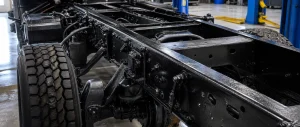
Diagnose corrosion before quoting the coating
A professional undercoating service starts with a careful review of the frame, crossmembers, brackets, suspension contact areas, and old coating failures. This step separates cosmetic surface rust from scale that can hide structural risk. A better estimate comes from understanding where contamination is active and how much preparation the chassis needs before sealing.
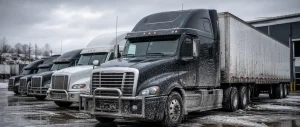
Strip road salt, scale, and weak coatings
Paint or sealant cannot perform if it is applied over trapped road salt or loose oxidation. Media blasting profiles the substrate so primers and frame protection can bite into clean steel. This is the difference between a protective barrier and a layer that peels as soon as winter moisture gets underneath.
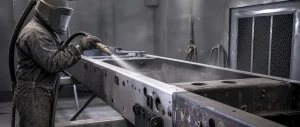
Stabilize the areas that take the most abuse
Commercial truck frames carry stress at brackets, crossmembers, exposed rails, steps, and suspension mounts. These areas need careful stabilization before coating. Composite body parts, fiberglass fairings, and cab panels should also be repaired before final finish work so the vehicle leaves as one complete system.
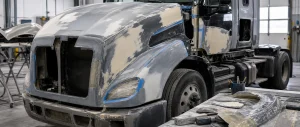
Apply coating in controlled shop conditions
A durable application depends on booth conditions, airflow, clean masking, and correct film build. Controlled application keeps overspray down, protects surrounding parts, and produces a finish that looks professional while resisting salt, moisture, and chemical wear.
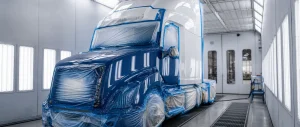
Inspect curing and document the handover
The final inspection confirms coverage, cure, edge quality, and visible repair points before the truck returns to the road. Clear handover photos also help fleet teams track condition, warranty expectations, and maintenance timing across multiple assets.